Saturday, 23 February 2019

Rain Man 1988

The Film:

I was sixteen in 1988 and I saw a *lot* of films at the cinema that year. Rain Man was by far my favourite and it has been in my Top Ten of all time ever since.

So, whilst I also have previous winners such as All About Eve and The Godfather in my Top Ten, this is the first in our challenge that I have been pretty fanatical about since it first came out. Which means I'm not sure what I'm going to make of it in the context of this challenge.

I've not been keeping count of how many times I've seen it, but it's somewhere between ten and twenty times. Out of all the films on our list, there's only (possibly) The Sound of Music that can match up to that.

However, it's been a few years now and we are in a time of very different sensibilities when it comes to the portrayal of disability. I know a lot more about Autism now (as do most people!) and have more personal experience through students and friends. I am really worried that Hoffman's portrayal of Raymond Babbitt isn't going to cut it for me any more - and even the possibility of that makes me really sad.


The Ceremony:

I'm writing this on the eve of this year's Oscar ceremony. After various controversies, it's going ahead without a host this year. The last time this happened was on March 29th 1989 at the Shrine Auditorium. In the greater scheme of things, the ceremony should be remembered as the first time the words "And the Oscar goes to...." were used instead of "And the Winner is...". Also, it's the first year that Bruce Vilanch took on main writing duties - a role he has held ever since.

However, it's always going to be more remembered for the Opening Sequence (the BBC even wrote an article about it this year!) and the fact that it practically killed Allen Carr's career (not that Alan Carr, the other Allen Carr...). It's gloriously awful - have a drink or two before you watch it, or be prepared to pick your jaw up from the floor!


Other Notable Winners That Night:

Dustin Hoffman won the second of his Oscars, and Jodie Foster won the first of hers (for The Accused). Supporting Oscars went to Kevin Kline and Geena Davis. Rain Man took home four awards all together, but didn't even get a nomination for Tom Cruise - and Hans Zimmer missed out on the Best Score Award (even though it's one of my favourite scores of all time - but what do I know!)

Probably the most notable winner of the night was in the category of Animated Short. The winner was Tin Toy - the first of 19 awards (to date) for the mighty Pixar. Here it is, serving both as a marvel of technology and reminder of how far we've come in thirty years:


Best Song:

Three of my favourite ever Theme Songs to films are sung by Carly Simon (the other two are Nobody Does it Better and Coming Around Again). This one won her an Oscar and it still sounds wonderful today, even if it does mean that the first five minutes of Working Girl are by far the best five minutes!


What We Could/Should Have Been Watching:


I'll leave you to write your own caption for this one....in French!
Obviously I'm happy with the winner here - it's one of my favourite films! However, there are some other worthy contenders.

The other nominations were for The Accidental Tourist, Working Girl, Mississippi Burning and Dangerous Liaisons. Objectively, Mississippi Burning is the best of those films, but I had nearly as much of a thing for Dangerous Liaisons as I did for Rain Man - so it's getting the runner up prize for me. (I liked to make out that my love for Dangerous Liaisons was entirely due to studying French literature at A Level at the time. I bought the book in French and went on about it in a really pretentious way. However, I never actually read it - and I've since seen Cruel Intentions far more often than Dangerous Liaisons, so I'm guessing there were other reasons....)

Our Verdict:


He's an excellent driver!
Counting cards
I know times are changing and both the understanding and portrayal of disability has come a long way in thirty years. However, I am going to continue to defend this one to the hilt. Firstly, this isn't a film about autism - it's a film about a particular autistic person. Raymond's character is based on Kim Peek, who worked closely with Hoffman to help him prepare for the role. This makes all the difference - particularly because it means I can get down off my defensive high horse and focus on what the film is really about - the relationship between two brothers and how one needs the other in order to see and experience the world fully, to understand his emotions and how to interact fully with other people. And - clever but gloriously subtle twist - the brother that needs that is Charlie, not Raymond. That, in a nutshell, is why I love this film so much and why I still love it thirty years later. It's also why I think Tom Cruise should have won Best Supporting Actor. I can't believe he wasn't nominated: if you compare his performance with Kevin Kline's in A Fish Called Wanda, how can you possibly give KK the award?
The screenshot that sums up the whole film!

Ok - I've got my big bugbears about other people's takes on this film off my chest. I'll calm down now. However, the relationship between Raymond and Charlie and the stunning performances of both actors are, in my view, the best things about Rain Man. The film could so easily have been overly-sentimental and mawkish, but it isn't. It could also have been really insensitive and ill-informed (even if it was well meaning) but it isn't. It could have been far too serious and sure of its own importance, but it isn't. The script (which also won an Oscar) makes sure this doesn't happen.

Twelve minutes to Wapner.....
I still find Rain Man an easy film to watch, and an enjoyable one. It's incredibly quotable and much parodied but it stands up to both of these things. It has a lovely streak of humour running through it and yet it reduces me to tears at the end every time I watch it. The cinematography is beautiful - for a film that is so character-driven, so much loving attention is paid to how it looks. The musical score is one of my favourite of all time and gave Hans Zimmer the first of his eleven nominations to date. The score is a good example of what I like about the film this time round - it's incredibly 1980s, but it hasn't become dated.

Ultimately, Rain Man is a variation on one of my favourite film tropes - the Road Trip Buddy Movie. It comes a close second to Priscilla Queen of the Desert in this genre. The two films have more in common than I previously realised! And I recommend them both to you.


The Last Emperor 1987

The Film:

This is not one I'm particularly looking forward to. I don't know a great deal about it, but what I've heard makes it sound very much like it's "not my sort of thing".

First of all, it's very long - over three hours in the version we've got. This isn't necessarily a bad thing (Gone With The Wind, The Godfather) - but it also gets praised for its sweeping cinematography and cast of thousands, which makes me think rather more of Lawrence of Arabia or Ben Hur.....

All the reviews I've read talk about how beautiful it looks - and all the pictures I've seen show a two year old emperor dressed up to the nines in front of several hundred troops of beautifully attired minions. It doesn't bode well. But I'll keep an open mind!

The Ceremony:

April 11th 1988 at the Shrine Auditorium. It was moved to the new venue mainly because it had a larger audience capacity. Everything bigger and better in the 80s! It was hosted by Chevy Chase and went on for three and a half hours.

The show was affected by the big Writers' Guild strike, which was about one month in to it's five month run. Some of the script for the event was already written, but the rest of proceedings were covered in less formal fashion by a variety of Stand-up Comedians.


Other Notable Winners That Night:


And very tasty it was too.....
None of the actors in The Last Emperor were even nominated, so the acting awards went elsewhere. Moonstruck took the female awards, for Cher and Olympia Dukakis. The male awards went to Michael Douglas for Wall Street (which was criminally overlooked for Best Picture!) and Sean Connery for the also shockingly overlooked The Untouchables.

Best Foreign Language Film went to a personal favourite, Babette's Feast - adapted from a novella written by none other than Karen Blixen (as seen a couple of years ago wafting aimlessly around Africa). It's a beautiful film and I am very fortunate to have spent an evening in excellent company sharing as close to the exact menu as is human(e)ly possible. (No actual turtles were consumed!)

The Animation award went to something else that I have a fairly strong nostalgic memory of. Probably from a retreat or something. It's called The Man Who Planted Trees and it's a beautiful thing:


Best Song:

There can't be many people in the western world that don't know this one. The number of people of about my age who had this as their first dance at their wedding must be pretty high. Here's Baby, definitely not in a corner:


What We Could/Should Have Been Watching:

Denzel Washington and Kevin Kline - what's not to like!
If ever there was a year to argue that the Best Picture List should be lengthened again, this is it. Until I actually watched The Last Emperor, I not only reckoned that it probably wasn't a worthy winner, but I had a whole different list of five nominees in my head.

The actual other four nominees are: Broadcast News, Fatal Attraction, Hope and Glory and Moonstruck. Nothing really wrong with that, but I would have gone for Wall Street, The Untouchables, Good Morning Vietnam, Babette's Feast and - the one that gets my vote - Cry Freedom. Attenborough's other big epic. I actually do think it's better than Gandhi. The two leads are both incredibly good, the story is compelling and really well paced - and the funeral scene is the reason I cry whenever I hear the South African National Anthem (it's happened several times at athletics events!)

Our Verdict:


Ahhh. Grasshopper!
Ok, I admit it. I was about as wrong as I could possibly be. In fact, I don't think the difference between my expectation of a film and what I actually thought of it has ever been so vast! With the greatest respect to Gordon Gekko, Eliot Ness and all the others mentioned above, I was so wrong in thinking they had all been robbed blind. Puyi is the rightful heir of all things Oscar in 1987!


I have absolutely no idea why the marketing for this film was the way it was - yes, it's gorgeous to look at, it's got massive crowd scenes, beautiful costumes and amazing cinematography. And it's got a small child dressed up to the nines - for about the first half hour or so of the three hours plus running time. But it's got all sorts of other, far more impressive and interesting things going on that I was never told about. And it is a fantastic film!

Not just a three-year-old in a dress.
Firstly, this is a film with a lot of heart. It follows the life story of Puyi from his birth through six extraordinary decades of personal discovery and political change. We see most of it through his eyes, and this really captures the feeling of constantly being a pawn in everyone else's political games. Puyi - at all stages of his life - is such a compellingly written and acted character that I got sucked into his story very quickly. For a character whose life was so extraordinarily different to that of most people watching the film, his struggles and reactions are very relateable.

Sumptuous film, complicated story - but ultimately
just about flawed characters in difficult situations
Because of this, the political story that runs alongside - and gathers pace as the film unfolds - is totally compelling! Although I profess to be fascinated by early 20th Century History, I know shockingly little about how events unfolded in the Far East. This film has gone a long way to fill those gaps for me. It could have ended up being very complicated, technical and wordy - but it didn't. Mainly because we saw things as Puyi did, but also because of a few other equally compelling characters that really made the film for me.

Peter O'Toole is, quite famously, the only Westerner among the main cast (another red flag before I watched film!). He did his job well, but was quite underwhelming. Apart from Puyi himself, it is the women who steal the show. Puyi's wife, "secondary consort" and cousin (the wonderfully named spy, Eastern Jewel) are all superb - again, both in the way their parts are written and how they are played. Between them they hold the second half of the film together - not because they are female characters providing some sort of light relief from the political shenanigans, but because they are right at the heart of all the political shenanigans. And they are brilliant!

Sisters (well, cousins sort-of) doing it for themselves.
In conclusion then - what a fantastic film! Which leaves me wondering what on earth was going on with the marketing? Nothing I had ever read or seen about The Last Emperor gave me any real reason to want to see it. I even decided to buy a cheap import DVD rather than the more expensive lavish BluRay, because I reckoned we'd probably never watch it again. How wrong I was! - anybody want a cheap import DVD version, because next time I want to watch it on remastered BluRay!


Friday, 25 January 2019

Platoon 1986

The Film:

It's another 'Nam film. And one that I haven't seen (although I feel as though I should have). Whilst it would never be a genre I would automatically choose to watch, I've been pleasantly surprised and impressed by the war films we've watched so far, including the 'Nam one (The Deer Hunter).

However, from what I know about it, I'm not sure that this is going to be quite the same. First of all, it's Oliver Stone so it's going to be brutal and serious - the word "visceral" springs to mind. Secondly, I know that it all takes place actually out in Vietnam, so I'm guessing it's not going to focus on the wider back story of these men at all. That might be what makes it great, but that doesn't really appeal to me.

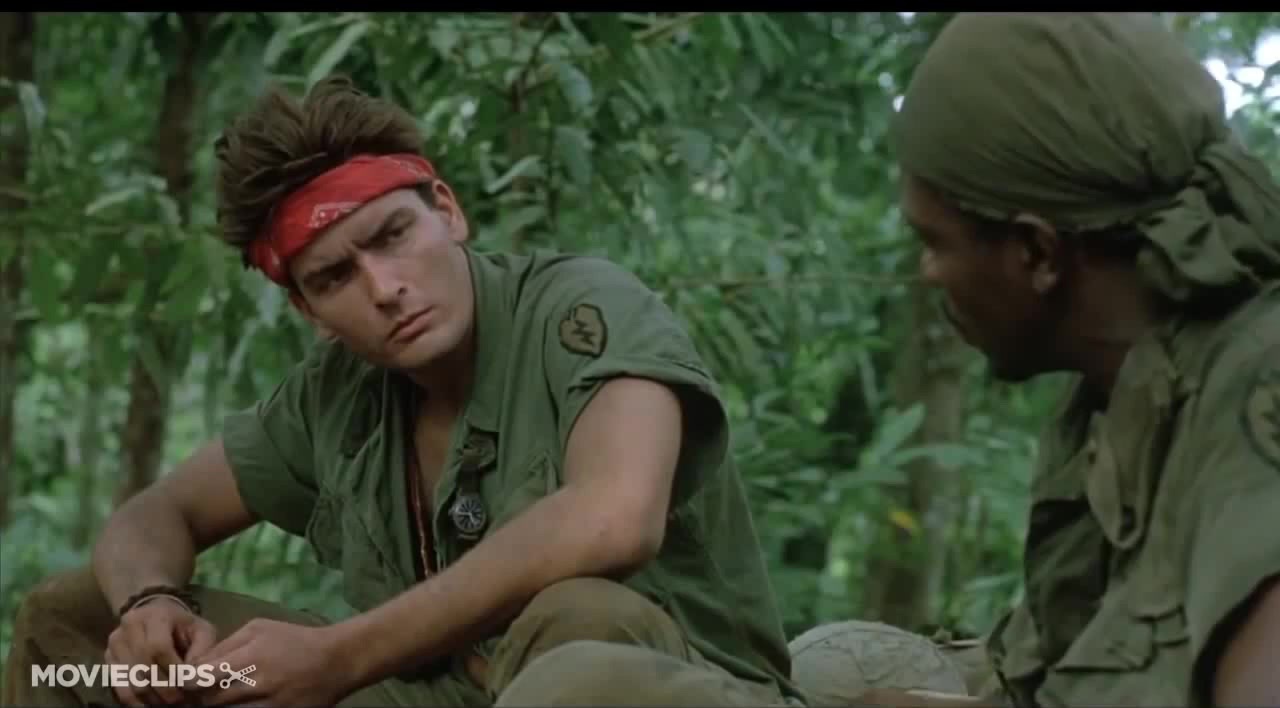
Other than that, I know we've got Barber's Adagio, raining bullets, lots of sweaty jungle scenes and a very young Charlie Sheen (and possibly several other soon-to-be-famous 20somethings?). I'm determined to keep an open mind!

The Ceremony:

There was continued concern this year about ratings, leading to all sorts of production interference. Probably the most significant was the attempt to reduce the running time of the ceremony by introducing a 45 second limit for acceptance speeches, much to the annoyance of several recipients then and since. The broadcast still ran to nearly three and a half hours. The ceremony was co-presented by Chevy Chase, Goldie Hawn and Paul Hogan in an attempt to keep it fresh, funny and appealing to younger viewers. I'll let you be the judge:


Other Notable Winners That Night:


About time too!
Of course I'm slightly biased here - but this is the year to celebrate the fact that the lovely Mr Newman finally did get his Oscar! For playing Fast Eddie in the sequel to The Hustler, The Color of Money. He's sixty years old in this picture and still very handsome.

Best Actress went to Marlee Matlin, who I know more for her unfortunate lipreading mistakes in Seinfeld and for being a kickass politician in The West Wing. She won for Children of a Lesser God, her first acting credit. Some people cried political correctness, but I think that's unfair - she's really good.

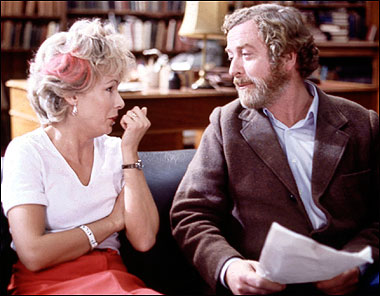
The other big winner this year was Hannah and Her Sisters - Michael Caine and Dianne Wiest took the other acting awards and Woody Allen got Original Screenplay.


Best Song:

The thing is, I love Berlin (both the city and the band). I could give you a list of at least a dozen songs by Berlin that I much prefer  to this one. And it wasn't even the best song on the Top Gun Soundtrack (hooray for Kenny Loggins) But it was everywhere in 1986 and it was the one that won the Oscar. (Although it is now always sung along to in our house with the words to Walking On The Moon - thanks Peter Kay!)


What We Could/Should Have Been Watching:

It's an RE thing....I can't help it!
I don't really disgree that Platoon was a worthy winner, but there were so many good films released in this year. I'm finding it hard to pick a favourite out of the nominees and I may still change my mind. I've seen all the other nominees and like them all - Hannah and Her Sisters, Children of a Lesser God, A Room With a View and The Mission. I'm going to honour my roots as a Catholic and an RE teacher and go with The Mission. But it's a close call.

It was also the year of Aliens, which is arguably a better film than all five nominees put together - certainly if you consider impact, longevity and technical achievement as well as good acting, directing and storytelling. We also had Stand By Me, Blue Velvet and My Beautiful Laundrette, among others. Take your pick!

Our Verdict:
My irrational dislike of both these two really helped!
As I hoped, this film is firmly in the category of films that I rate as really good - and yet can't really say that I like. It is a great film and I'm very pleased that I finally watched it. I recommend it to others that haven't seen it yet. But I won't be in a hurry to see it again.

It's Oliver Stone - and if you know his work and know what Platoon is about then you can pretty much work out exactly what the film is going to be. Considering this was the first time I watched it, the feel of the whole thing, the storytelling, the characters and the shocking scenes were all things that I was expecting. That's not to say that it was any less impressive or shocking because of this - I was both impressed and shocked in equal measure.

It's difficult not to compare Platoon to the previous 'Nam winner, The Deerhunter. I think I still prefer the earlier film, but this one is very different and all the better for it. Unlike Deerhunter's three-act structure of home-away-home again, Platoon is just one relentless, claustrophobic trek through the jungle and the horrors within. We get to know something about our main characters, but we hear it directly from them - we never actually see them in their natural setting, just in their titular Platoon. It makes for a very different film, and I like that.
The horrors of war

There is no flinching from the reality of the brutality of war - and it is very clear that, if there is a classic "baddie", it is war itself rather than one side or the other. Our so-called heroes (and, to an American audience they would have been "our boys") do some horrific and inhuman things to innocent civilians that they come across. Stone tries to suggest some of the reasons for their actions, but never tries to excuse them.

If this image had sound, it would have
been written by Samuel Barber
Several of the characters are also ambiguous in their morals. We're left to wonder if they really are that evil and heartless - or if their fear and false bravado is the reason. Of the three main characters, two are played by actors I have an irrational dislike of. In the case of Tom Berenger (I can't get over the ending of Looking For Mr Goodbar, so he just gives me the creeps) this probably helps. He plays the psychotic war-addled Sgt Barnes brilliantly. With Willem Dafoe I feel a tad unfair - he's great as someone who shows almost the flipside reaction to that of Barnes, which leads to the epic image (and soundtrack) that most people associate with Platoon.

Charlie Sheen pre-Tiger Blood
The real revelation is 20 year old Charlie Sheen showing what a chip off the old block he had the potential to be before the sex, drugs and tiger blood got in the way. He's the real heart of the film for me and his character made all the difference. There were some great films in 1986. This one isn't my favourite, but I'm happy to agree that it might just be the best one.


Saturday, 19 January 2019

Out of Africa 1985

The Film:

This is one that I've not seen before. Or if I have then I've completely forgotten about it. I'm actually not looking forward to it very much at all - but I'm hoping that my preconceptions will be proved wrong.

The think is, I don't know why I'm not keen, except that all I've seen or heard about the film is lots of moody shots of people on African plains. And Meryl Streep's slightly un-nerving accent.

Firstly, I like both Streep and Redford. If the film is mainly these two, then it can't be that bad. Secondly, I like the director, Sydney Pollack. He did They Shoot Horses Don't They?, Tootsie and the lovely remake of Sabrina. (And he was Will's dad on Will and Grace!).

I also really love Babette's Feast, which was written by Karen Blixen, the character that Streep plays in this. That should be enough to keep me interested and happy. Surely?

The Ceremony:

Exactly fifty-two weeks after the previous awards - March 24th 1986, at the Dorothy Chandler pavilion. This time it was a triple-header of presenters. Jane Fonda, Alan Alda and Robin Williams. It ran only one minute longer than last year, coming in at 3 hours and 11 minutes. There were concerns about falling TV ratings in recent years, so a lot of time and money was thrown at this year's ceremony which included various song and dance numbers - including the one here, which included Howard Keel, Debbie Reynolds, June Allyson, Leslie Caron, Esther Williams, Cyd Charisse etc etc.

Oh, and it wasn't the year that Cher won an Oscar - but it was the year that she wore *that* dress (see below).


Other Notable Winners That Night:


One of these two won an Oscar - the other
one won all the headlines!
First of all, we need to talk about the notable non-winner of the night. The Color Purple had eleven nominations, but didn't win a single Oscar. Some people have put it down to the Spielberg effect (he did crowd-friendly blockbusters, not Oscar films...) and others blame the predominant African-American theme of the film and the predominant Whiteness of the Academy - a criticism that still has some justification today. Maybe it was just bad luck - who knows!

On the plus side for diversity, Best Actor went to William Hurt in Kiss of the Spider Woman - the first time an acting award was given to someone playing an openly LGBT character. Don Ameche was one of the oldest ever winners, taking Supporting Actor aged 77.

However, he wasn't the oldest nominee - John Huston was 79 when he was nominated for directing Prizzi's Honor. His daughter Anjelica won Supporting Actress, becoming the first ever third-generation winner (Grandad Walter won back in 1948, before she was born)

Best Song:

We're still in a golden era of Movie Songs. My choice this year would have been Huey Lewis and the News (but, then, I'm a Back to the Future geek, so it would be!). The Academy went with Lionel Richie for Say You, Say Me from White Nights. But it does mean we get to look at some cross-genre dancing with Hines and Baryshnikov! 


What We Could/Should Have Been Watching:

Poor Celie....
Kiss of the Spiderwoman, Prizzi's Honor and Witness were all nominated. Of those I've only seen Witness - and I really like it. And then we have The Color Purple which would have been my winner. Great film, shockingly overlooked in favour of a bunch of white people in Africa! I think Steven, Whoopi and Oprah have probably just about got over it by now, but it's still not right. (And I shall return to this theme in a few years' time when the best film of the year is almost completely ignored for possibly similar reasons.....)
1.21 gigawatts of awesome!

On a lighter note, this was the year of Back to the Future which is still in my all time Top Ten. Spielberg again (producing this time) and definitely not regarded as Best Picture material (although director Bob Zemeckis went on to direct a winner a few years later). However, it is now regarded as a classic and is still watched and loved by new generations. And it wipes the floor with Meryl and co!


Our Verdict:

Take two bottles into the shower? Nope, just
Robert Redford and a great big jug of water!
Meh. Can I just leave that as my review? Just "Meh"? I'm struggling to say very much more about it. If I had really disliked it (like "Tom Jones", "Gigi" etc) then I'd have plenty to say. If I'd really loved it I could tell you all the reasons why. But there's actually very little wrong with this one. It's just "meh".

I'll try and put it into pros and cons to explain why I pretty much come out entirely neutral about the whole thing.

Pros:
1. The acting and directing is all great. I can't really argue with that. I like Redford, Streep and Pollack - and they all do what they do very well in this film.
2. The landscape is beautiful and it is really well shot. This film is lovely to look at - and that does make a difference. Add in the John Barry score and the overall effect is impressive.
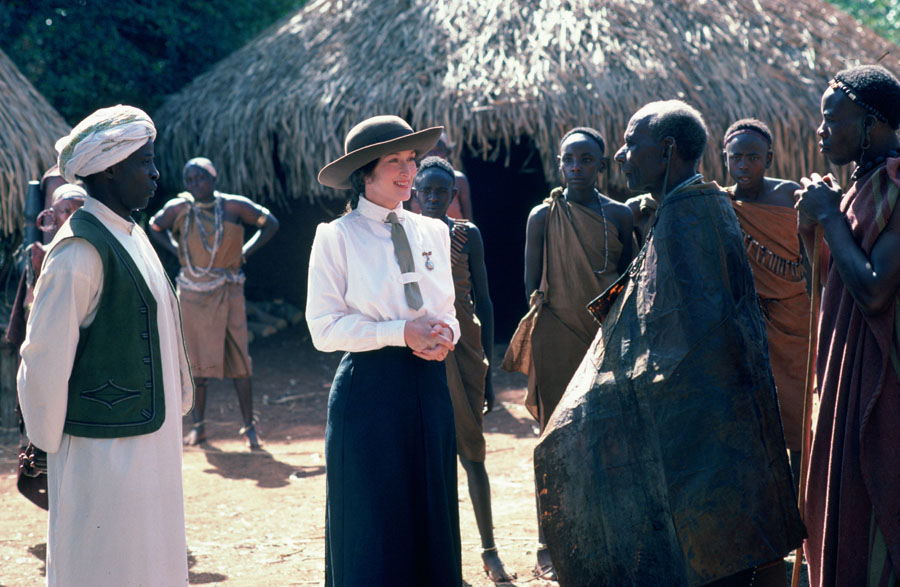
Ok, I admit, the interactions with the tribespeople
are great!
3. It is a film about a strong woman and that character comes across well. (Said woman is also the writer of Babette's Feast, which is a plus for me!). This is shown particularly well when she meets with the local tribes people and Streep just about redeems the film in these scenes. Apart from Aurora and Emma, there haven't been many strong women in our winners since Margo, Eve and co - so this is definitely a plus!
4. There is a fabulous wind-up gramophone that appears in several scenes. It's just that little bit nicer than the one I own, and it perks me up every time I see it.

The star of the film is the one on the left. The far left.
That beautiful gramophone........
Cons:

1. I suppose the fact that my favourite thing about such a lavish big-budget film is a small prop that appears now and then counts as a big mark against it!

2. In the year that The Color Purple went away empty handed, the winner is a film set in Africa that is basically a bunch of rich white people behaving as though they had sole rights to the place and complaining about how hard their lives are because of this. It's not the fault of OOA that it is forever set against TCP in my head (and the heads of many others) - but I came to this film knowing what lost out to it, so it definitely counted as a minus.

A bunch of white people striding around talking
3. Ultimately the men are really boring. Even Redford's character. I couldn't muster up much emotion for him, or for his relationship with Karen (which is meant to be at the heart of the film) - so much so that the poignant ending did very little for me.

4. Linked to that last point - I got bored with the story as well. I need to have some sort of reaction to the characters in a film to be bothered about what happens. And I didn't. So I wasn't.

There - I did have something to say after all. But ultimately, my verdict is: Meh.


Amadeus 1984

The Film:

It's our second Milos Forman film - and the first one (Cuckoo's Nest) is such a triumph that this is going to find it hard to match up to it. Thankfully, it is a very different film - set in a different time, filmed in a different way and with a very different focus (from what I remember - it's been a while since I saw it!)

I am looking forward to seeing it again after all this time. There's very little that I remember about it, except the music (obviously) and the general feel of the film. One of Andy's often-uttered quotes is "don't trust him, he killed Mozart" - which apparently is from Last Action Hero! - and he does seem to have a bit of a thing about F Murray Abraham as Salieri, so I'm intrigued to see that again.

But I know I'm going to get slightly disappointed when, even though our hero is sporting a suitably punk-y wig, he doesn't end up rapping in German!

The Ceremony:

March 25th 1985 at the Dorothy Chandler Pavilion. Hosted by Jack Lemmon and running slightly shorter than last year, at 3 hours and 10 minutes. There is much of note in terms of who actually won the awards - see below. In terms of the ceremony itself, probably the most notable thing is a (relatively slight) gaffe in announcing the winner. Sir Laurence Olivier got a bit ahead of himself and tore open the envelope to declare the winner without mentioning the nominees. Winning producer Saul Zaentz showed what a class act he is by making sure he mentioned every other nominee in his speech! Here's the opening of the ceremony:


Other Notable Winners That Night:

They liked her - right then, they liked her!
Most of the awards went to Amadeus, including Best Actor for F Murray Abraham (although Tom Hulce was also nominated in the same category). The Best Actress winner, Sally Field, delivered one of the most famous acceptance speeches with the line "this time I feel it and I can't deny the fact that you like me, right now you like me!"

The Best Supporting Actor was Haing S Ngor, a Cambodian surgeon, who won for The Killing Fields, despite not being a professional actor (only the second to do so, after Harold Russell). Best Supporting Actress was Peggy Ashcroft for A Passage to India - at 77, the oldest winner in that category.

It was also the first time that more than one Black performer would win an Oscar in the same year. Prince won Best Song Score and Stevie Wonder won Best Song.

Best Documentary Feature went to one of my favourite documentaries - The Times of Harvey Milk. The story of Harvey Milk has since been made into an Oscar-winning film in itself. Both films are excellent - but this one is more impressive, partly because of the timing of its release, only six years after Milk's death and at a time when LGBT-themed stories were far more controversial than they are today.


Best Song:

For the first time in Oscar history, every one of the Best Song nominees went to Number One in the US Charts. The other four were - Against All Odds, Footloose, Let's Hear It For The Boy and Ghostbusters. But it was Stevie Wonder's year to win an Oscar (to go with his 25 Grammys!) for possibly his least impressive song (imho) "I Just Called To Say I Love You". I love Stevie more than all the other four artists put together, but I'd have given it to Phil Collins this time (I was obsessed with that song!)


What We Could/Should Have Been Watching:

Mrs Moore! Mrs Moore! Mrs Moore!
The other nominees were all big, serious, sweeping dramas - A Soldier's Story and Places in the Heart (neither of which I've seen), The Killing Fields (impressive, admirable but not enjoyable) and A Passage to India.

I loved A Passage to India when I saw it. It's been a while and I need to see it again. It was David Lean's last film and I think it's one of his best. Very serious subject matter, but with lovely humour. I think I'd rather be watching this than Amadeus - but it's very close between the two.

Our Verdict:
"Now, remember, pizzicato - oh, oh, oh, A-MA-DE-US"
It's a really odd film, this one. I like it a lot and appreciate it objectively even more than I like it. It is a very good film and deserved its accolades. But it is also very odd - which makes it surprising that it did so well with a relatively large and diverse audience.

After nearly three hours of it,
I can practically hear this picture!
The story includes many familiar elements. On one level it is a bio-pic of Amadeus himself, following him from his early days in court through to his death. On a slightly deeper level, it's actually not the life story of Amadeus at all, but rather that of his rival Salieri who is narrating the story from his deathbed. Ultimately, it is the story of the rivalry between the two (most of which is of Salieri's making) and the jealousy that drove Salieri to different levels of madness and evil-doing.

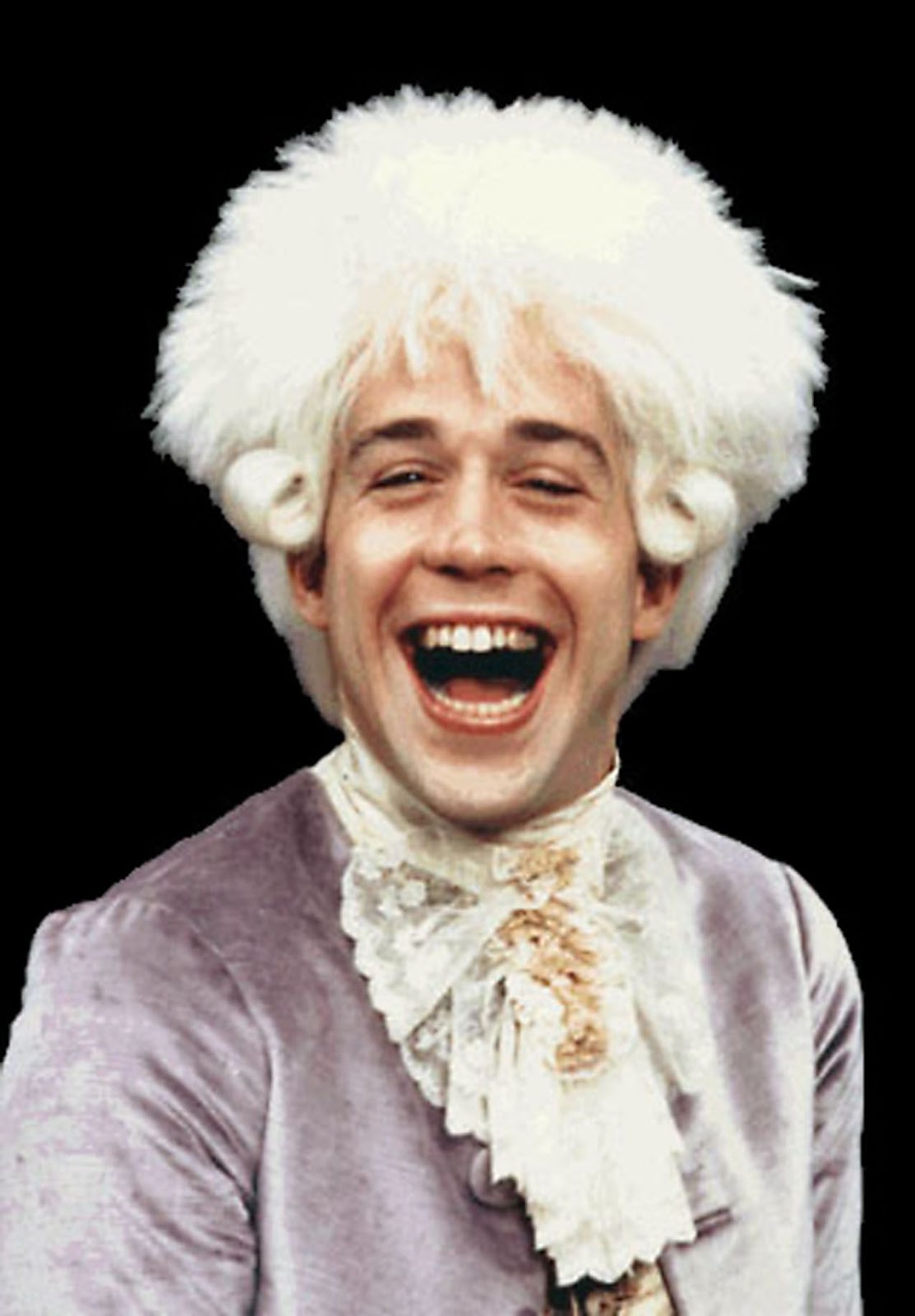
The first half hour or so really worried me. Amadeus is shown being uncouth and bawdy in the palaces of Vienna and his hideous signature laugh (which I did grow to love, sort of!), coupled with random belching, made me put up all my "not-my-sort-of-thing" barriers. It started to play out like parts of Tom Jones (which is still very high up on my "worst winners" list) and I was struggling to work out what I had liked about this film first time round.

More brocade and breeches than you can shake a stick at!
However, that soon faded as the story kicked in and completely won me over. One of the best things about the film is the slightly quirky nature of the characters and settings - including Amadeus himself, giggling fright-wigs and all. One one hand it is very much a classic costume drama. The sets and costumes are lavish and sumptuous and - as far as I am aware - fairly accurate. There are bewigged gentlemen dripping with brocade all over the place - but they don't speak in cut-glass RP and the women don't say "indeed" all the time. It's far more earthy than that - and all the better for it. You can tell that Milos Forman is taking everything incredibly seriously, including the importance of not portraying everyone too seriously (if that's not a contradiction...). It's unusual, but compelling - and it works. (At the time of writing I've not yet seen this year's awards tip "The Favourite" - but reviews and discussions with others give me the sense that it owes a fair bit to comic side of Amadeus).

Don't trust him......
Ultimately, this film is a drama rather than a comedy - and the main reason it succeeds so well is the performance of the two leads. They are two very different characters and both actors act their socks off in very different ways. It's a shame that neither of them could have been sold to the Oscars as a supporting character. They are both leading performances, so only one of them could win. (It would have been brilliant if there had been a tie this year!). Tom Hulce is great in a part that could so easily have been over- or under-acted. He strikes the balance between manic and tragic really well - as with the whole film, it's odd but it works. The Oscar went to F Murray Abraham as Salieri who is brilliantly villainous. He manages to be both subtle and subtle-as-a-brick, sympathetic and completely unsympathetic, incredibly measured and completely unhinged - and sometimes all at the same time. One of the greatest characters we've seen so far in this challenge, and one of the greatest performances as well.

Saturday, 1 December 2018

Terms of Endearment 1983

The Film:

I have to admit that this isn't one that fills me with great excitement. I'm pretty sure I've seen it before - but all I really remember is some reckless driving on a beach and a lot of crying. In my head I'm definitely mixing up some of the ending with Beaches (which is a film that I really can't stand...) but I know there's a lot of crying and a young woman dying of cancer. Which is probably a plot point that applies to more than just those two films.

The 80s winners do appear to be falling into one of two categories - big, sweeping historical dramas (Chariots of Fire and Gandhi, so far) and small, intimate portrayals of ordinary American life (Ordinary People and this one, so far).

I like Jack and Shirley - and they were both superb in their previous Oscar-winning films (if we forget about Around The World in 80 Days....). Whatever they are given to do, they are likely to do it very well. I'm just not sure how much I'm going to be interested in what they are given to do in this one....

The Ceremony:

April 9th 1984 at the Dorothy Chandler - and we're back to Johnny Carson as host again this year. From the clips I've seen of him hosting, this was a very good move! Here's the Opening Sequence (with bonus Shirley Temple at the end!) so you can decide for yourself:


Other Notable Winners That Night:


James L Brooks did the triple - Picture, Director and Screenplay - though he's probably going to be best remembered for bringing The Simpsons to our screens.

Jack and Shirley got the other two awards for Terms of Endearment and Robert Duvall took Best Actor for Tender Mercies.

Probably the most interesting winner of the night was Linda Hunt, who won Best Supporting Actress for playing an Asian Male part in The Year of Living Dangerously, becoming the first person to win an Oscar for playing a character of the opposite sex. For several reasons, this sort of casting would be very unlikely today - and certainly wouldn't be winning any awards!

Best Song:

Yet another absolute classic of a song (although the film itself is nowhere near as good as its soundtrack). Although I'm just as fond of Maniac - which was also nominated - this one is the worthy winner, and means that Irene Cara has two Oscar winning singles to her name!


What We Could/Should Have Been Watching:

Getting the rhyme wrong.....
The other four nominees this year were all fairly low key, serious dramas - Tender Mercies, The Dresser, The Right Stuff and The Big Chill. Of those I've only seen The Big Chill, which was fairly underwhelming and not as good as several similar things before and since.

Among the other films out there were Fanny and Alexander (which won Best Foreign Language Film), Silkwood, Yentl, Return of the Jedi and Educating Rita. Fanny and Alexander is probably the best of these, objectively. Jedi is the most successful. But I think Educating Rita would be my personal pick!

Our Verdict:
The three leads - the reason the film works
Now that we've watched this, I'm not entirely sure that I have seen it before - maybe I've just seen clips, or it was on in the background somewhere. Or maybe I've just misremembered a lot of it. In some ways it really wasn't what I was expecting - in other ways it was exactly what I thought it would be.

It was very much sold on (and remembered by) the two ideas of the central Shirley-Jack romance and the dying daughter. Both of these things are here - and both of them are much better that I thought/remembered.

Not something you see very often on Fleetwood beach!
Firstly, the romance. Aurora Greenway and Garrett Breedlove (for this is a film of silly names!) are both of a certain age and, after initially annoying the hell out of each over across the fence, give romance a try. What follows is as good evidence as we have of how superb both of them are as actors. They can be endearing and repellent (to each other, as well as to us) at the same time - and the story of their relationship gets to a lovely point by the end of the film.

Everybody needs good neighbours......
The dying daughter doesn't start to die until relatively near the end of the film. It's handled really well, isn't over-acted (I was definitely mixing things up with Beaches and the like!) and works really well to balance the humour and drama in the film.

However, the story isn't about Aurora and Garrett. It isn't even about daughter Emma and her husband Flap (told you it's a film of silly names!). It's essentially about Aurora and Emma and their strained yet solid relationship. Neither of them are perfect or even right most of the time. And there are several places in the story where they are each allowed to be downright unlikeable. But they are always there for each other - especially when Emma becomes sick. Debra Winger plays the part of Emma really well and would have been a real contender for Best Actress if it wasn't for the force of nature that is Shirley MacLaine finally getting her overdue Oscar. Jeff Daniels does a good job as the unfortunately-named Flap and it was a nice surprise to see John Lithgow as Emma's extra-marital interest.
Actually not as much snotty crying as I expected - thankfully!

Overall, Terms of Endearment was a better film than I thought it would be, but not as good a film as I would have liked it to be. It almost certainly resonated far more with Americans who were of a similar age as either Aurora or Emma - so not me then! Also, after two years of British triumph at the Oscars it's understandable that the Academy went for a slice of American life this time round. I'm glad we watched it, but I won't be rushing to watch it again in a hurry.

Saturday, 17 November 2018

Gandhi 1982

The Film:

Another British epic - even bigger than the last one! This is the second film on the list (after A Man For All Seasons) that is going to suffer from over-use in my day job. This has been a favourite for RE teachers for years, but not the whole thing (it would take a few weeks' worth of lessons to get through) and so there are several scenes that I've seen more times than I can remember - Gandhi getting kicked off the train, Gandhi burning work permits, Gandhi getting shouted at by Fred Elliot from Corrie (for it is he...)

Having said this, I can't remember the last time I saw the whole thing. It's probably more than 20 years ago. And I've probably only seen it all the way through once. I don't really remember anything else about it - except that it's epic!

I'm a big fan of Richard Attenborough's other two films from the 80s - A Chorus Line and Cry Freedom - and I've seen them both more often and more recently than this one. I'll concede that A Chorus Line isn't very good, and that I'm just a sucker for a Broadway musical. However, Gandhi is going to have to go some to be better than Cry Freedom.....

The Ceremony:


April 11th 1983 at Dorothy Chandler. It lasted three hours and fifteen minutes and was hosted by Liza Minnelli, Dudley Moore, Richard Pryor and Walter Matthau. What a line up!

There doesn't appear to be very much else to say about this ceremony that is interesting, unusual or significant. Except that George C Scott was there - this was the only ceremony that he attended!


Other Notable Winners That Night:

Gandhi won eight of the eleven awards it was nominated for, so there wasn't a lot else to go round.

Ben Kingsley beat impressive competition (Hoffman, Newman, Lemmon and O'Toole) to take Best Actor. Louis Gossett Jnr became the first African American Best Supporting Actor, Meryl Streep won her second Oscar, and Jessica Lange won Best Supporting Actress after being nominated in both Actress categories - the first time that had happened since the 1940s.


Best Song:

Continuing the absolute 80s classics - it had tough competition from Eye of the Tiger, but Joe and Jen smashed the competition - and did a great performance on the night, complete with a whole parade of white-clad officers!


What We Could/Should Have Been Watching:


Four Oscars to phone home about.
It was always going to be Gandhi. With all those nominations, all those famous faces, the crowd scenes, the cultural significance etc etc. However, there were other great films from 1982 - including a couple of personal favourites, Victor/Victoria and The World According To Garp.

The other films that were up for Best Picture were Tootsie (good film, but Sydney Pollack would have to wait a few years), The Verdict (another good one, but never going to be a winner), Missing (which I'd never heard of, but it sounds interesting) - and the one that has most stood the test of time, ET The Extra Terrestrial. ET did very well with the technical awards, as well as bagging John Williams one of his five Oscars. The comparisons between the small brown alien and the small brown Indian were sometimes funny, sometimes unkind, but far too obvious - and not altogether inappropriate!

Our Verdict:


I think I've got a worksheet somewhere to go with this clip
There's one thing about this film that I had not forgotten - it is, indeed, epic! It's a great piece of film-making in all sorts of different ways. For a start, the cinematography is impressive - in the way it captures crowds and also quiet landscapes, among other things.
It's the divine Mr C being clerical again.
The story is one that is definitely worth telling (and, to be fair, this film has already become the most familiar record we have of these events) and it is generally told really well. Considering that it is quite a long film with relatively few key characters and a fair bit of wordy politics, it does move at a reasonable pace and there are key set pieces well placed throughout. There is a bit too much reliance on white people popping up to explain things to each other (ie. to us) which comes across as clunky and bit crass. Mind you, those white people include Ian Charleson and Martin Sheen who both do it so well that I can almost forgive it as a device.

B%*#ards.....
Which brings me to the other great thing about the film - the acting is, on the whole, really good. Yorkshireman Sir Ben Kingsley (aka Krishna Banji) may have become almost a cliche in his most famous role, but he is superb. He manages to inhabit the character really well without ever quite crossing the line into impersonation. It helps that he looks so much like the man himself - but the fact that he also manages to convincingly look like the man himself over the course of five decades is great acting not just genetics! The supporting cast is also very good - a veritable who's who (and "where do I know them from") of the British and British-Asian acting fraternity.

Where's Wally, India version.
The big set pieces - some with casts of thousands - are very well directed. Of them all, the massacre at Amritsar is the most confronting, from the coldness of Edward Fox's General to the unflinching way in which the crowd is filmed trapped and panicking. I'm amazed that I didn't remember this from my earlier viewing. It's the scene that stuck with me most.

Overall I am pleased to confirm that this is a very good film indeed. It's not perfect, not without historical inaccuracies (or omissions, certainly in the case of the character of Gandhi himself) and it is not beyond criticism - much of which you can find online if you look. It wouldn't have been made the same way today, but it still holds up well 36 years on. Is it better than Cry Freedom? Objectively, possibly. Subjectively, definitely not. But it was good to watch it again.